
Home / Manufacturing
Documented, from raw material to release test.
A wiper is four materials and a dozen decisions. This page shows how each pair we supply is made — the rubber formulation, the steel, the tooling, the assembly sequence, and the five tests a batch must pass before it leaves the factory.
Jump to a production stage inside the film:
Raw materials.
Watch this stage in the film →
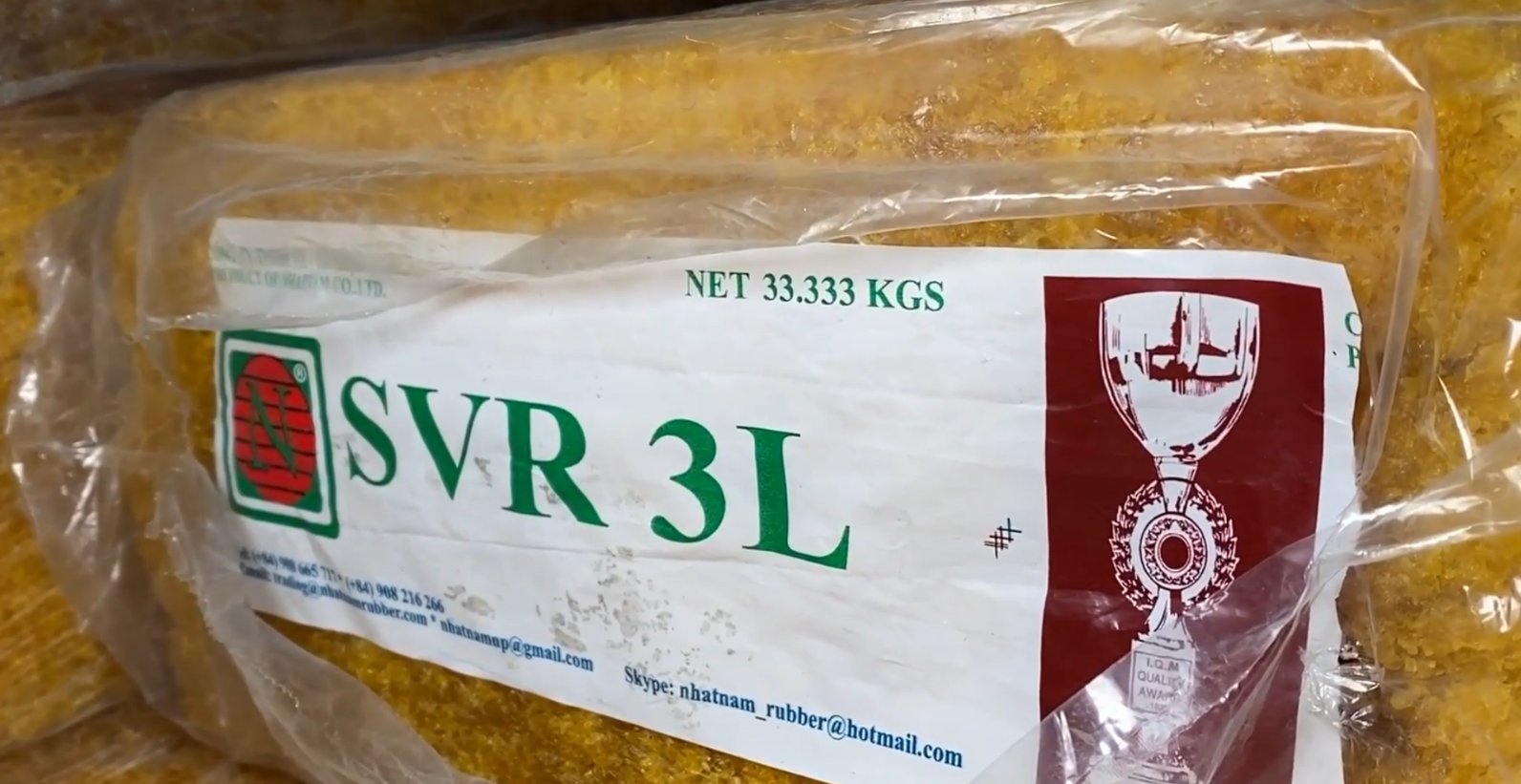
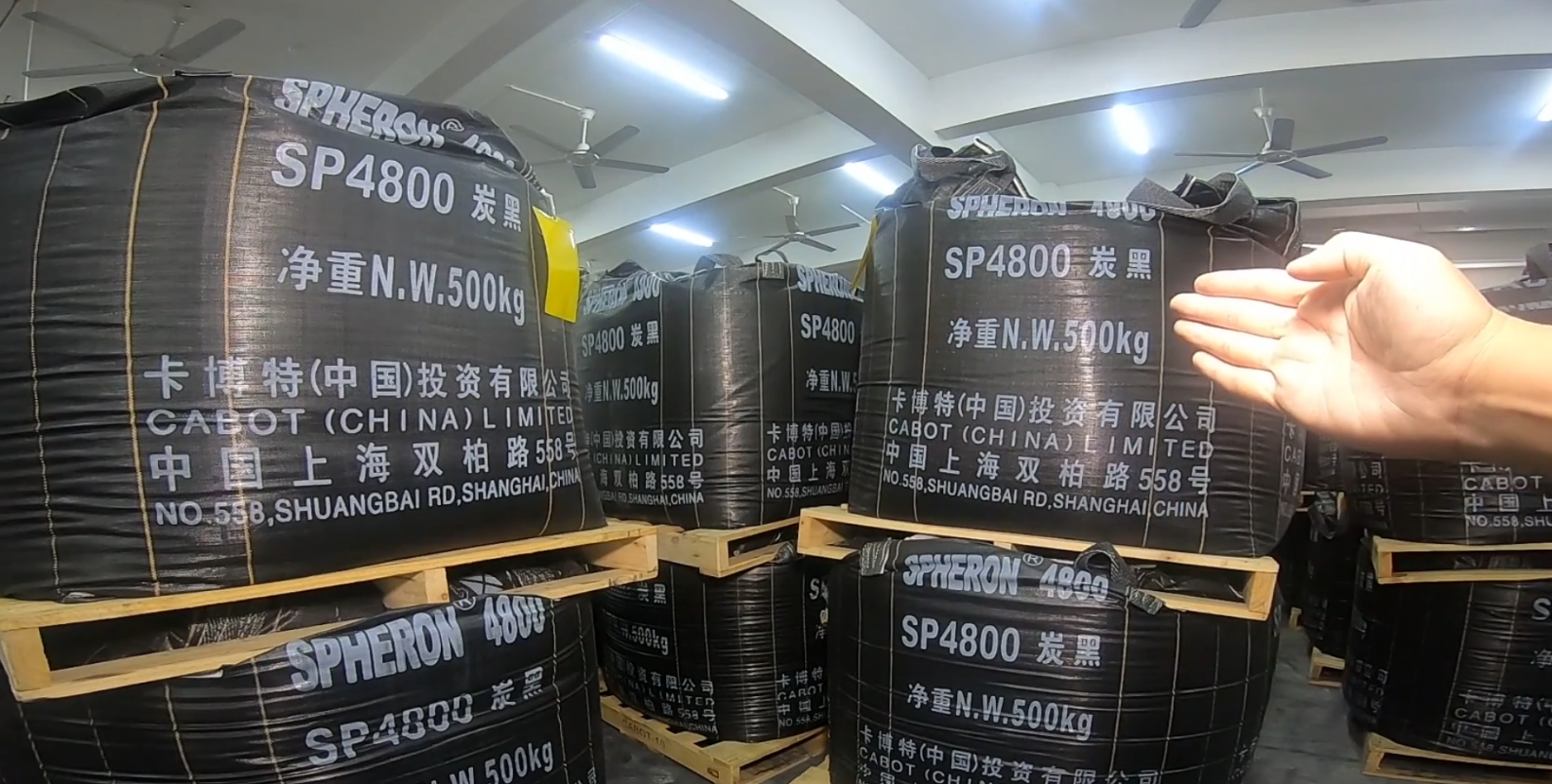
Natural rubber is sourced from Da Kim Bang, Vietnam. Carbon black is Cabot (US), compounded at roughly one part carbon black to ten parts rubber. Steel strip comes from a Belgian mill that also supplies original-equipment wiper steel to established car makers. Plastic components are moulded from virgin resin only — recycled or reground material cannot reproduce the colour stability we require.
Material choice is decided before the first machine starts. Everything downstream inherits it.
Rubber squeegee.
Watch this stage in the film →
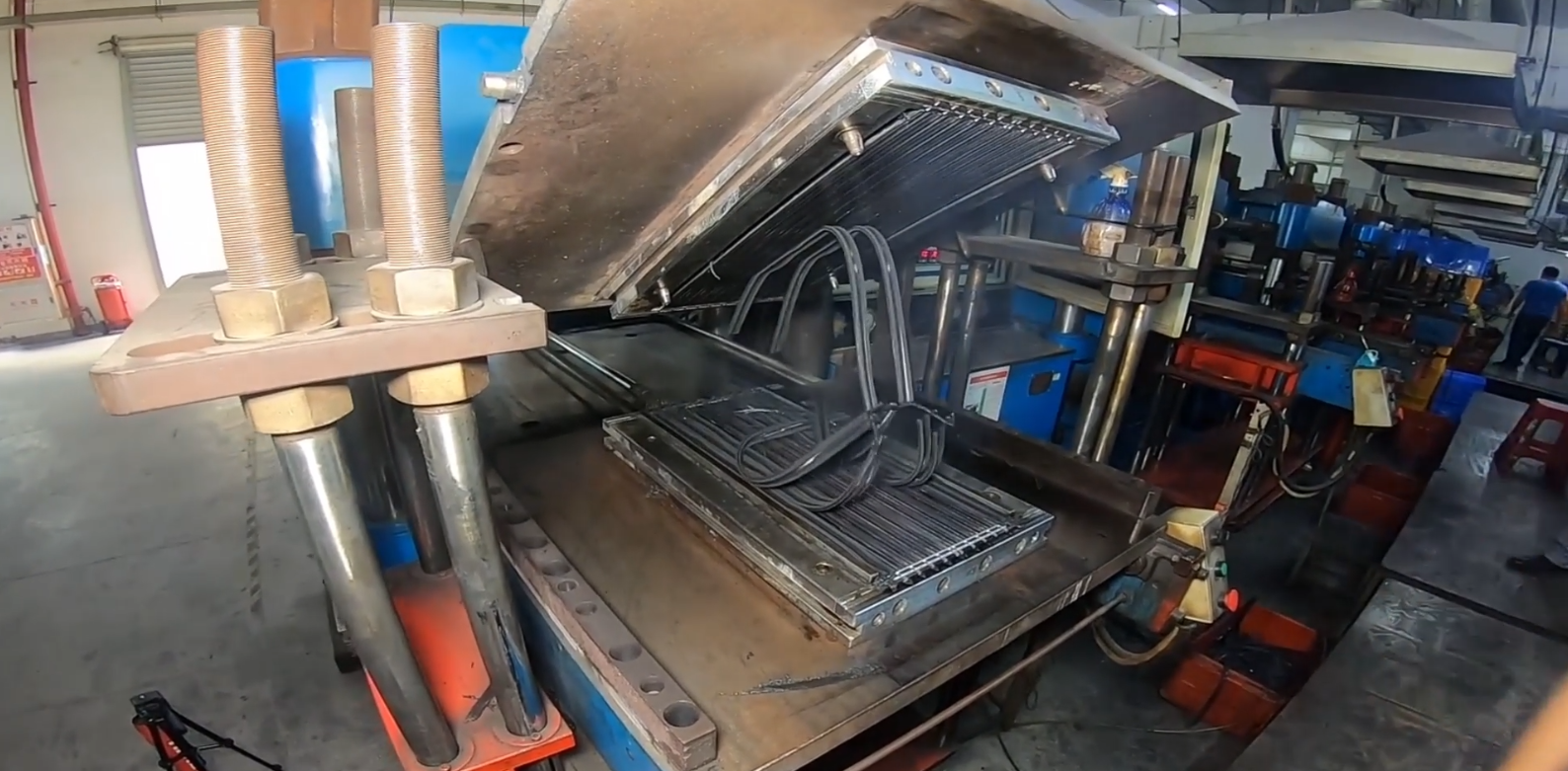
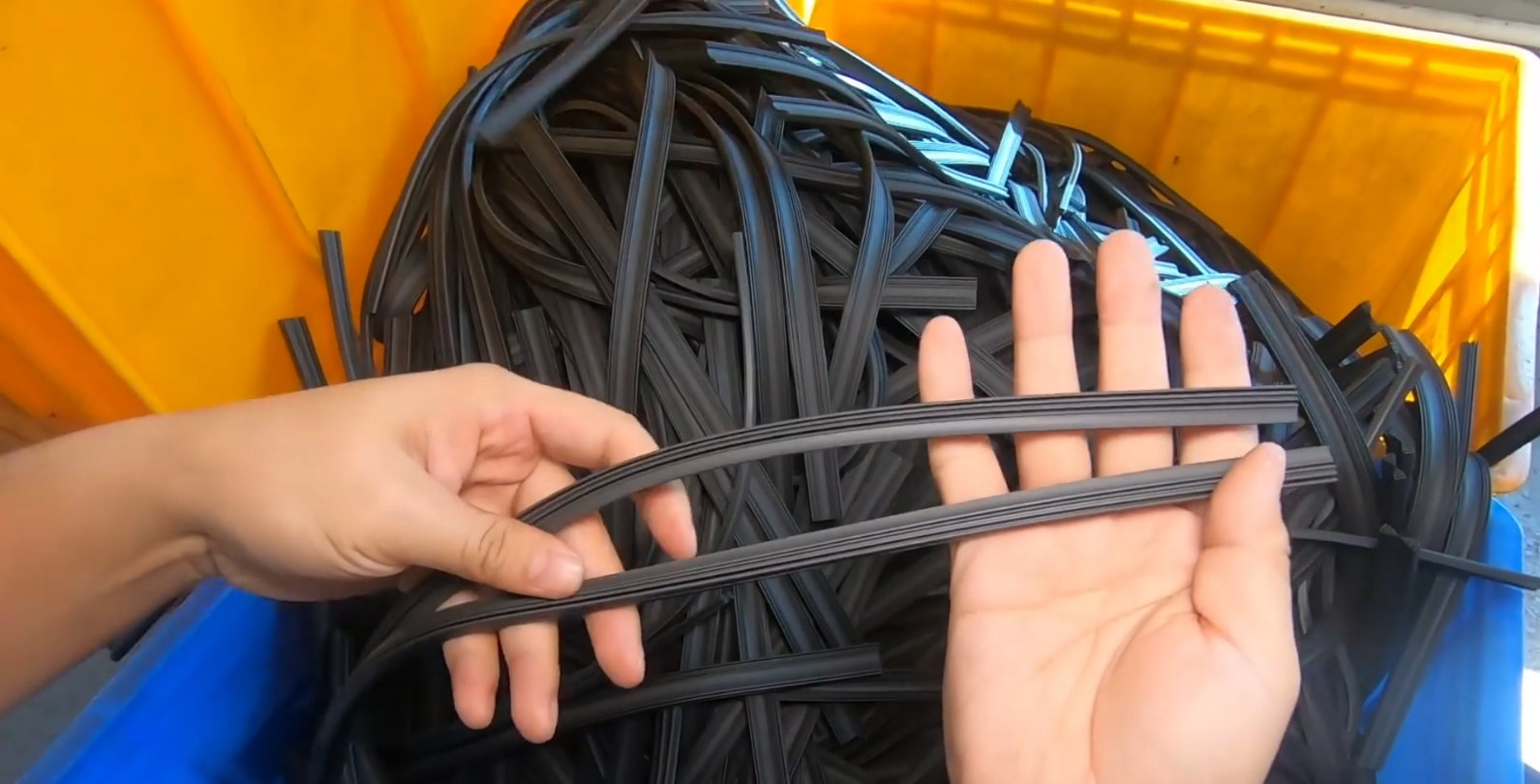
The squeegee is the only part of the blade that touches glass. Compound is mixed in an internal mixer, sheeted on a two-roll mill at least five times, then cured in single-cavity moulds at 180°C for 200 seconds — ten pairs per cycle. Single-cavity tooling costs more per piece and buys uniform thickness. After curing, each squeegee is acid-washed to roughen the surface, then graphite-coated; the coating is what removes drag and stops chatter noise in service.
Untreated rubber drags and squeaks. Treated rubber glides dry — the difference is visible in the film.
Steel strips.
Watch this stage in the film →
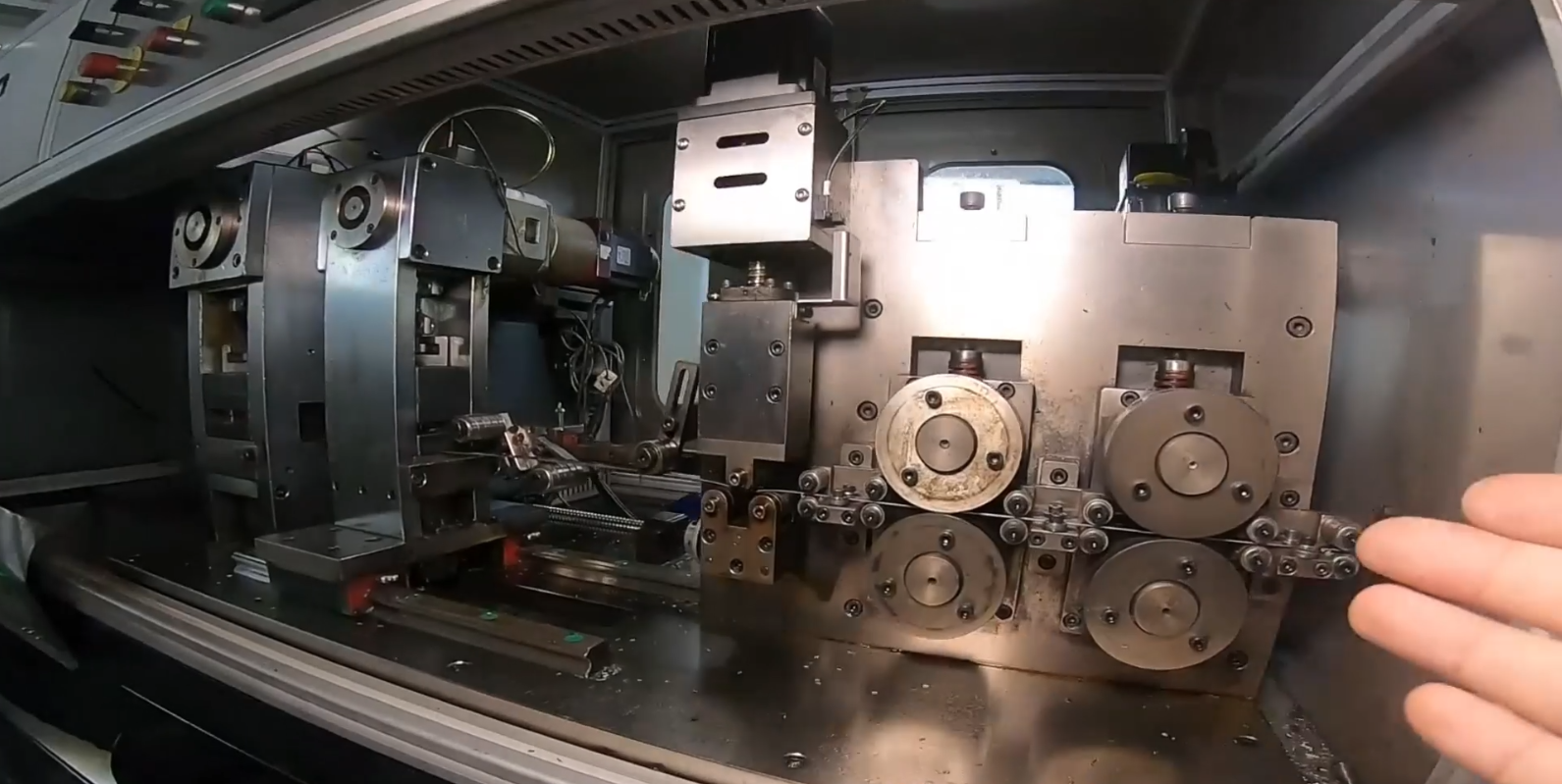
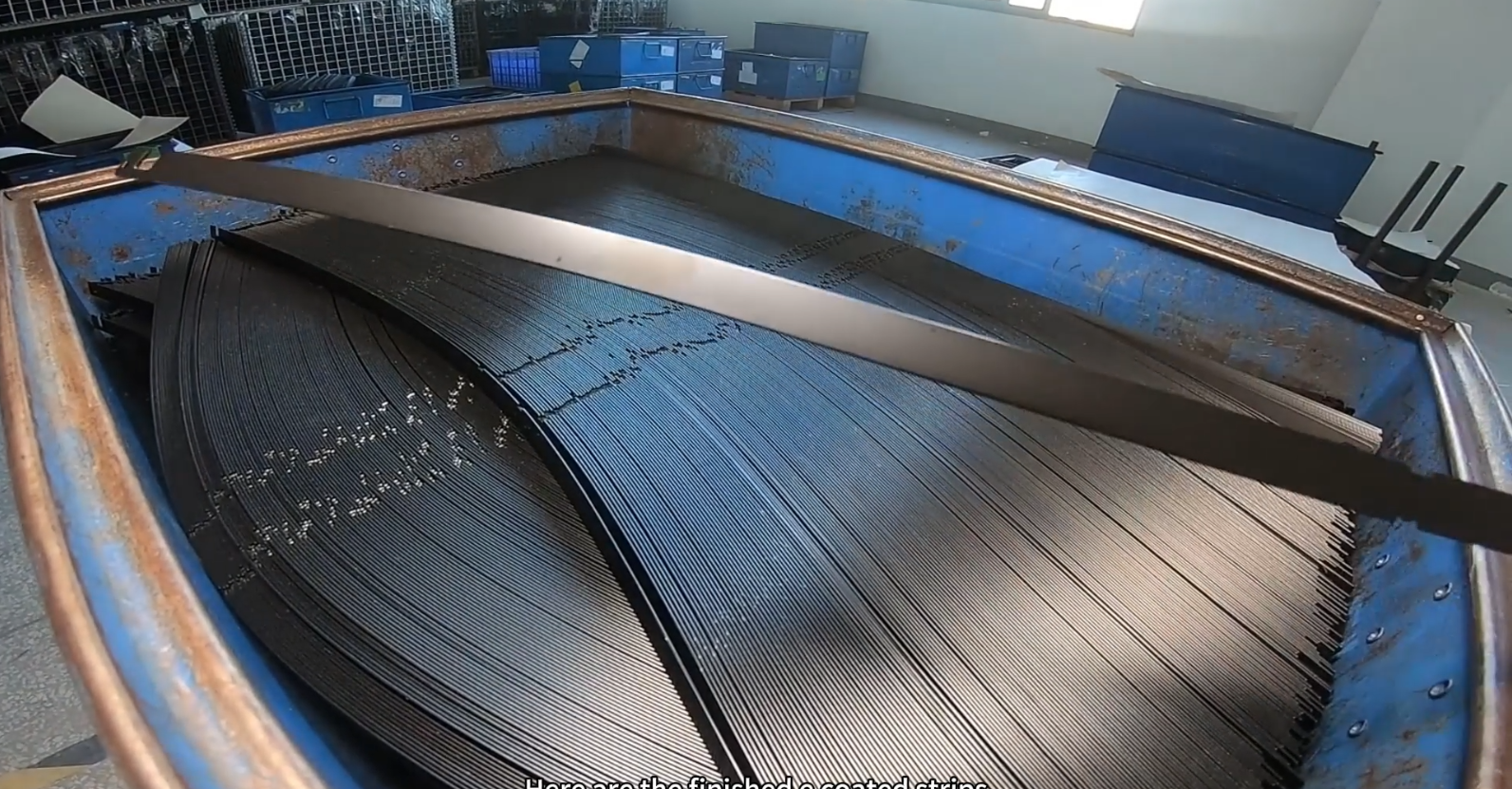
Steel defines whether a blade holds the glass curve. Coil steel is cut to per-model length and arc using tooling matched to the vehicle — the tooling library covers more than ten thousand models. Cut strips then go through an e-coat bath: a direct-current field bonds the paint to metal, giving adhesion and corrosion resistance beyond spray painting. It is the same first-layer process used on car bodies.
E-coating raises cost and lowers field returns from rust — a trade we take deliberately.
Shell & connector clip.
Watch this stage in the film →
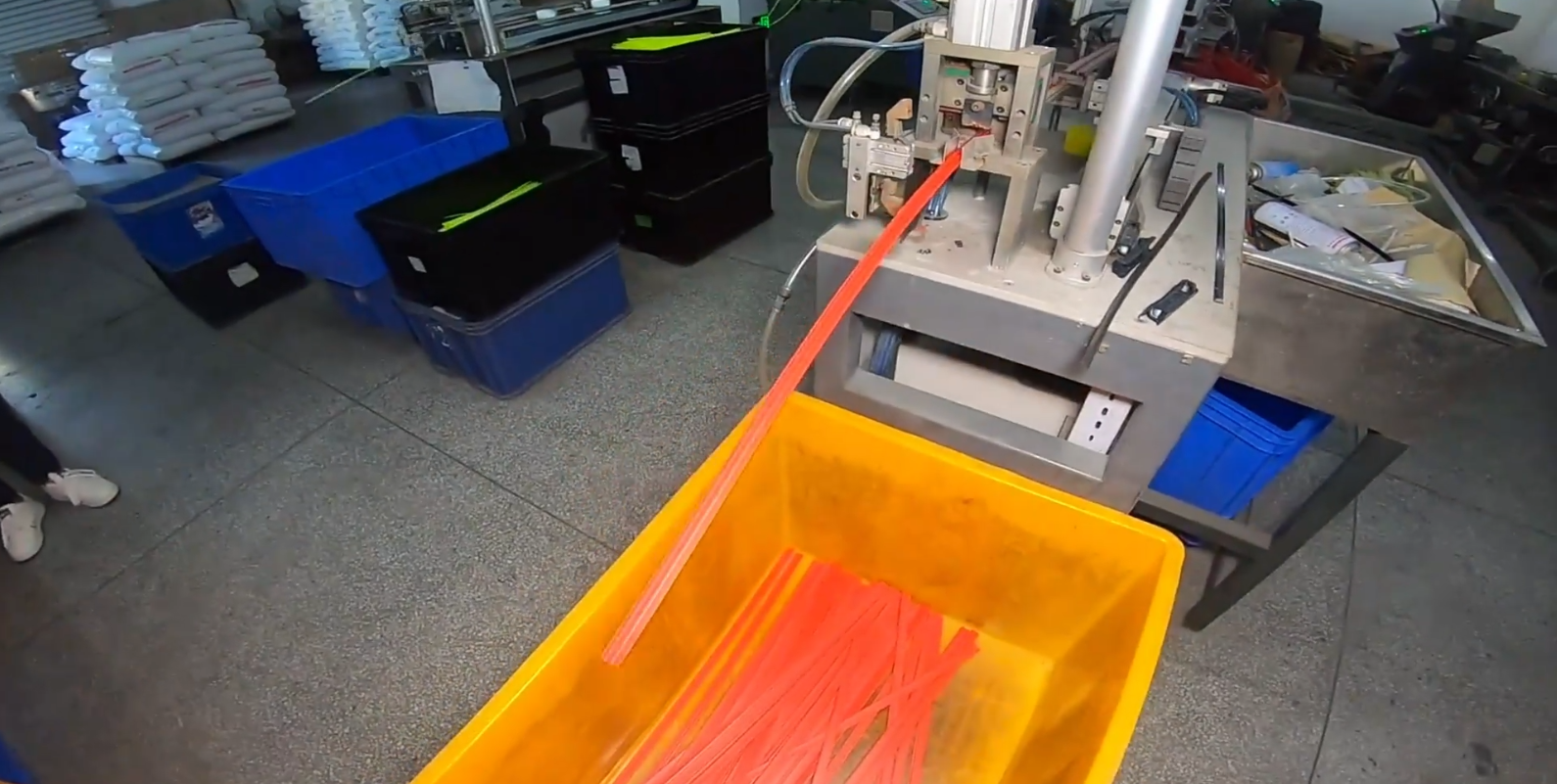
Spoiler shells and connector clips are produced on digital injection-moulding machines from in-house CNC-made tooling. A cycle forms five pairs of spoilers in roughly a dozen seconds, trimmed by robot. Because the tooling workshop is in-house, tooling for newly released vehicle models can be developed without a third-party queue — this is the practical reason the range covers Hilux, Land Cruiser, Patrol and other GCC fleet models.
In-house tooling shortens the gap between a new model on the road and a matching blade in stock.
Assembly.
Watch this stage in the film →
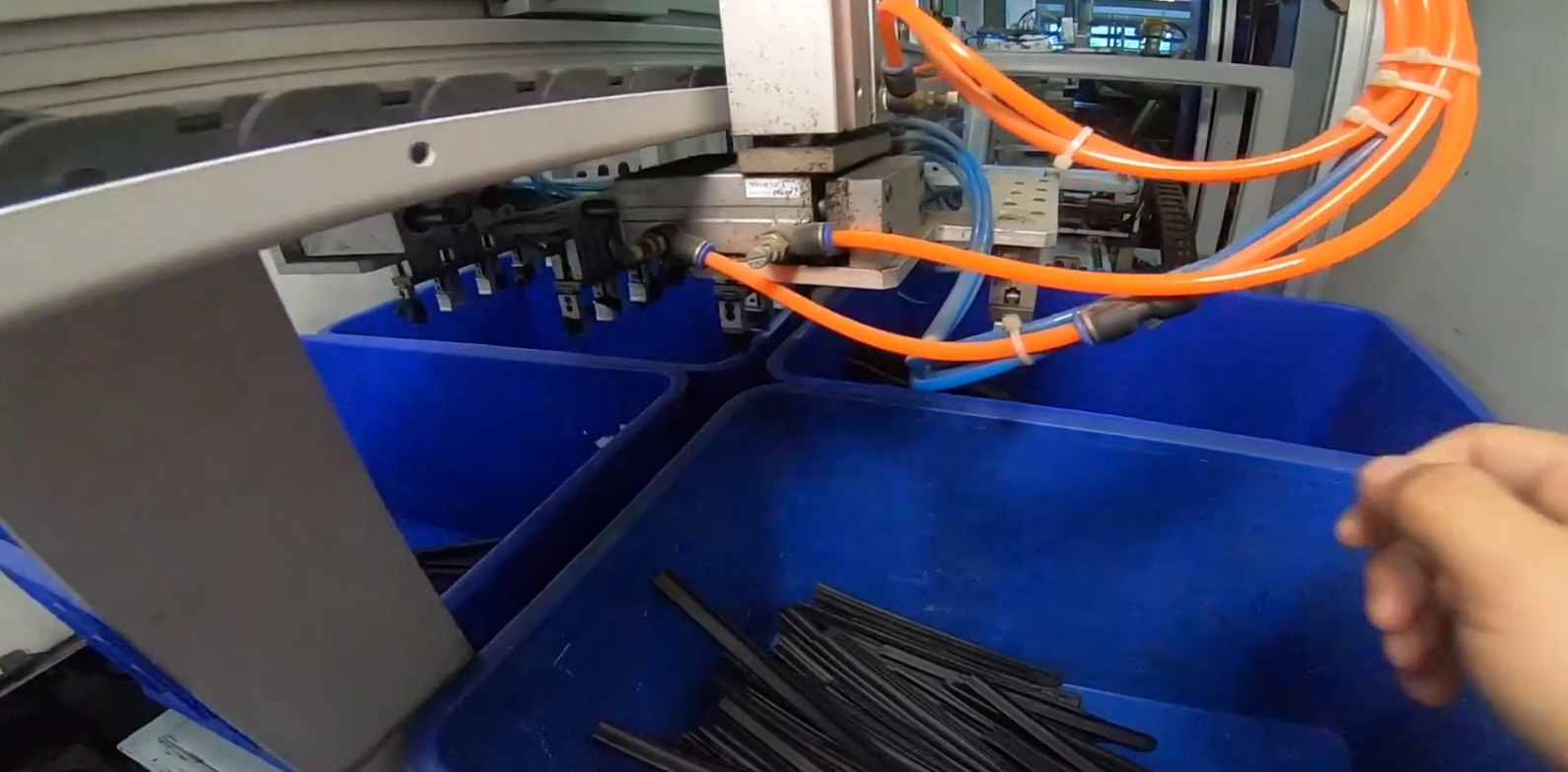
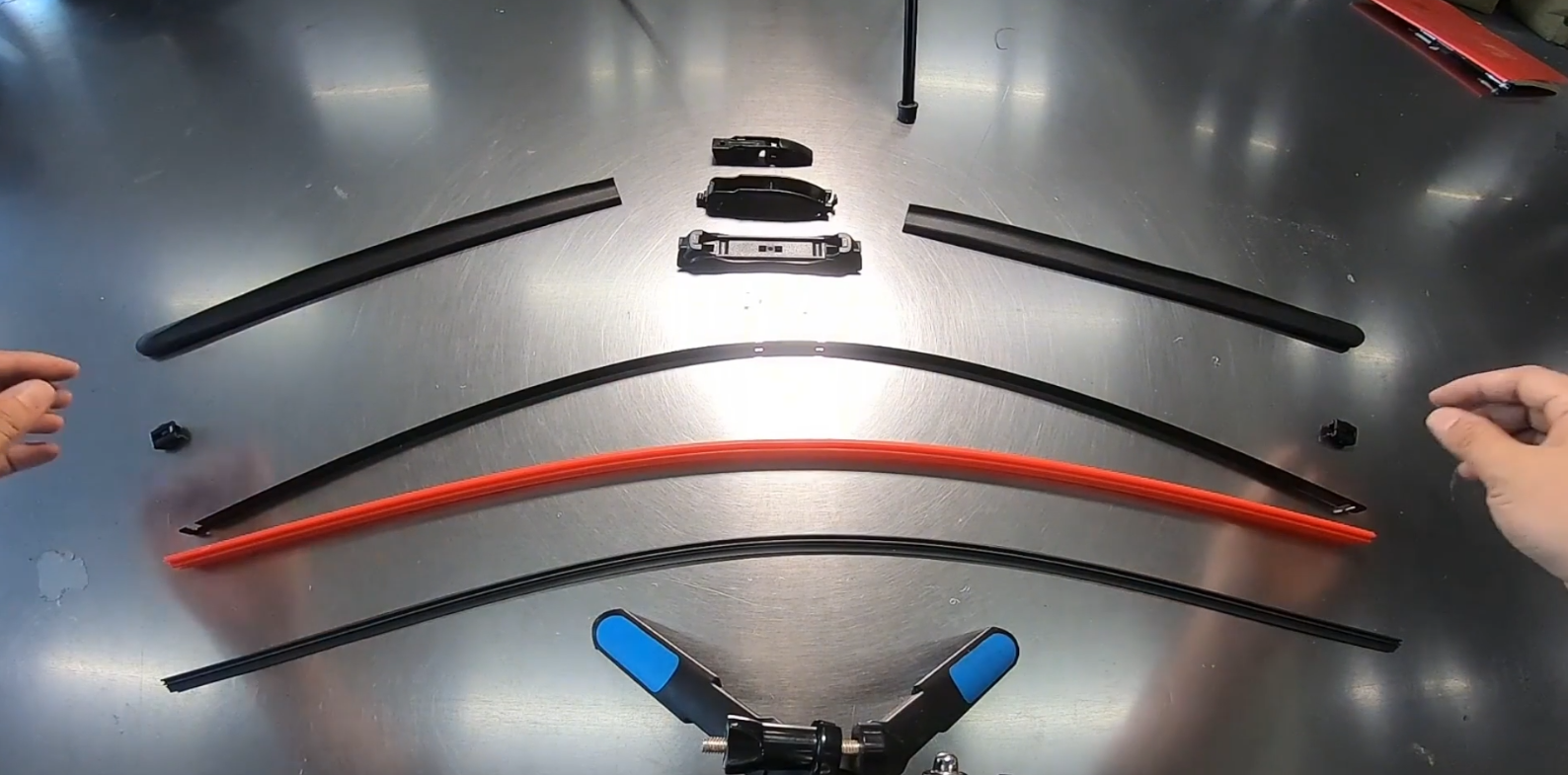
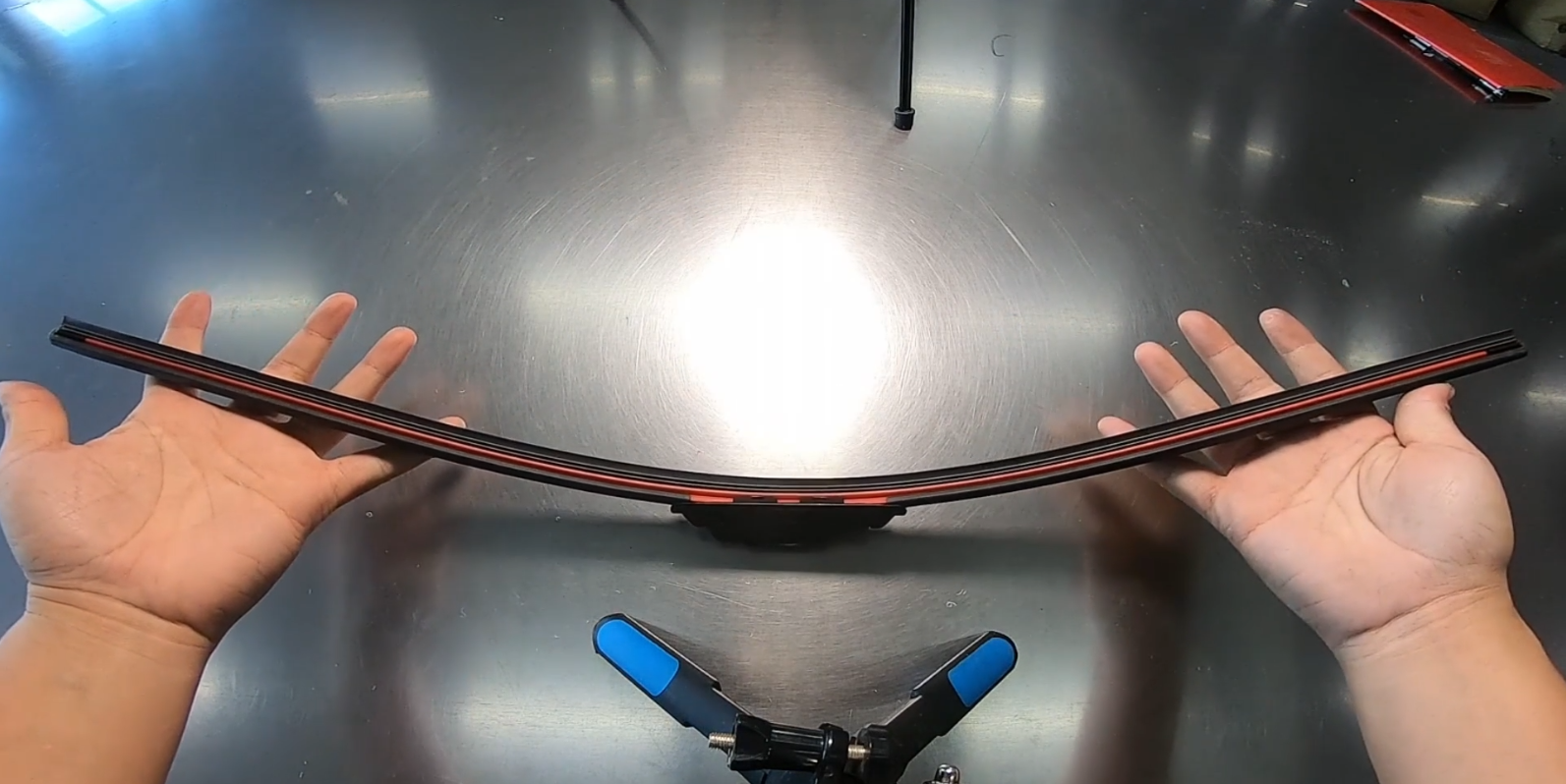
Sequence is fixed. Steel strip enters the connector half-way; the metal spring clip is seated in its slot, then the strip is pushed home. A positioning clip locks one end; the wiper-arm adapter enters from the other and engages the spring at centre, stopping lateral play. The spoiler snaps over the connector grooves, the arm-lock clip is fitted, and the squeegee channel is slid in, tip tucked under the end clip.
Every joint has one correct position. The film shows the sequence at working speed.
Release tests.
Watch this stage in the film →
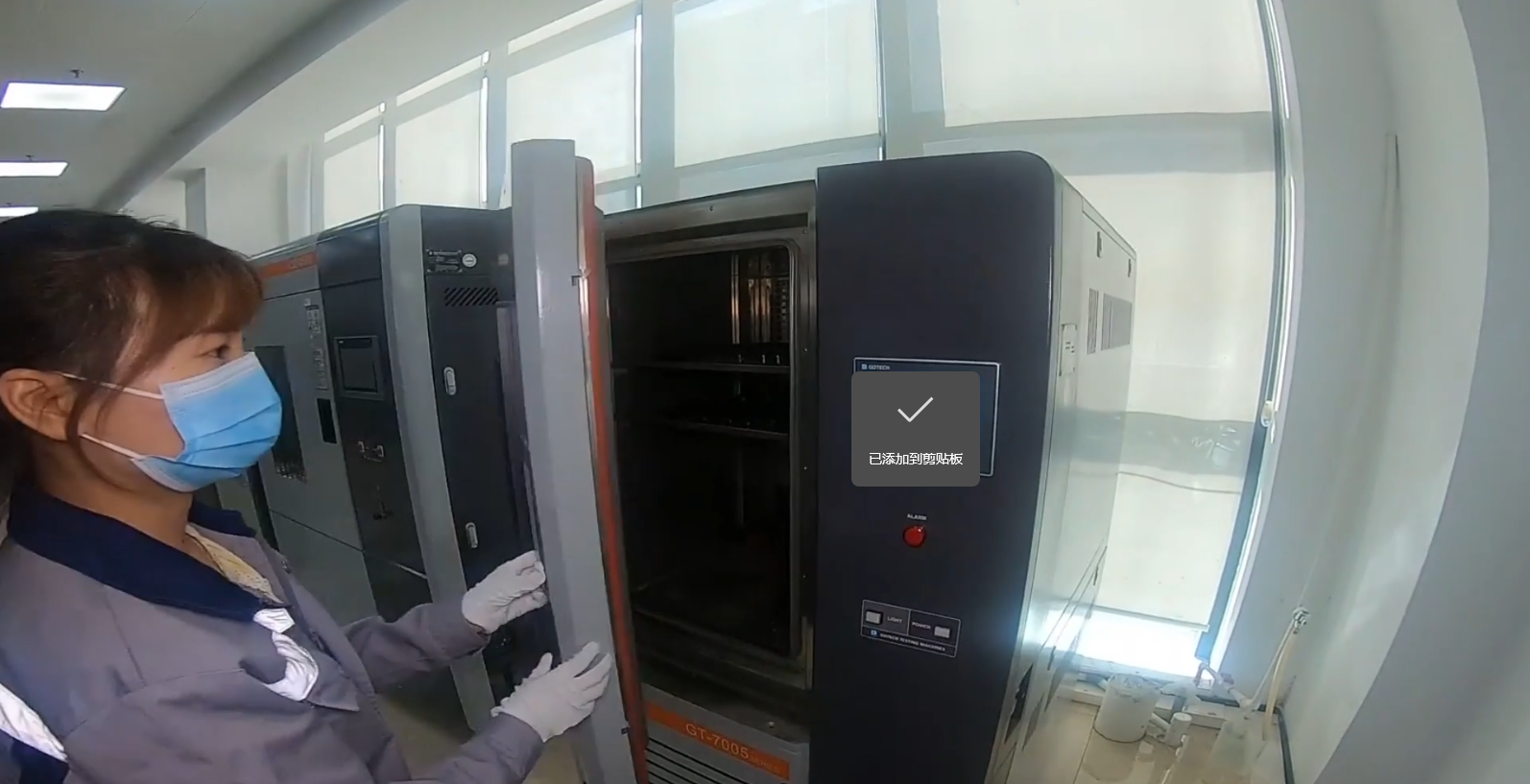
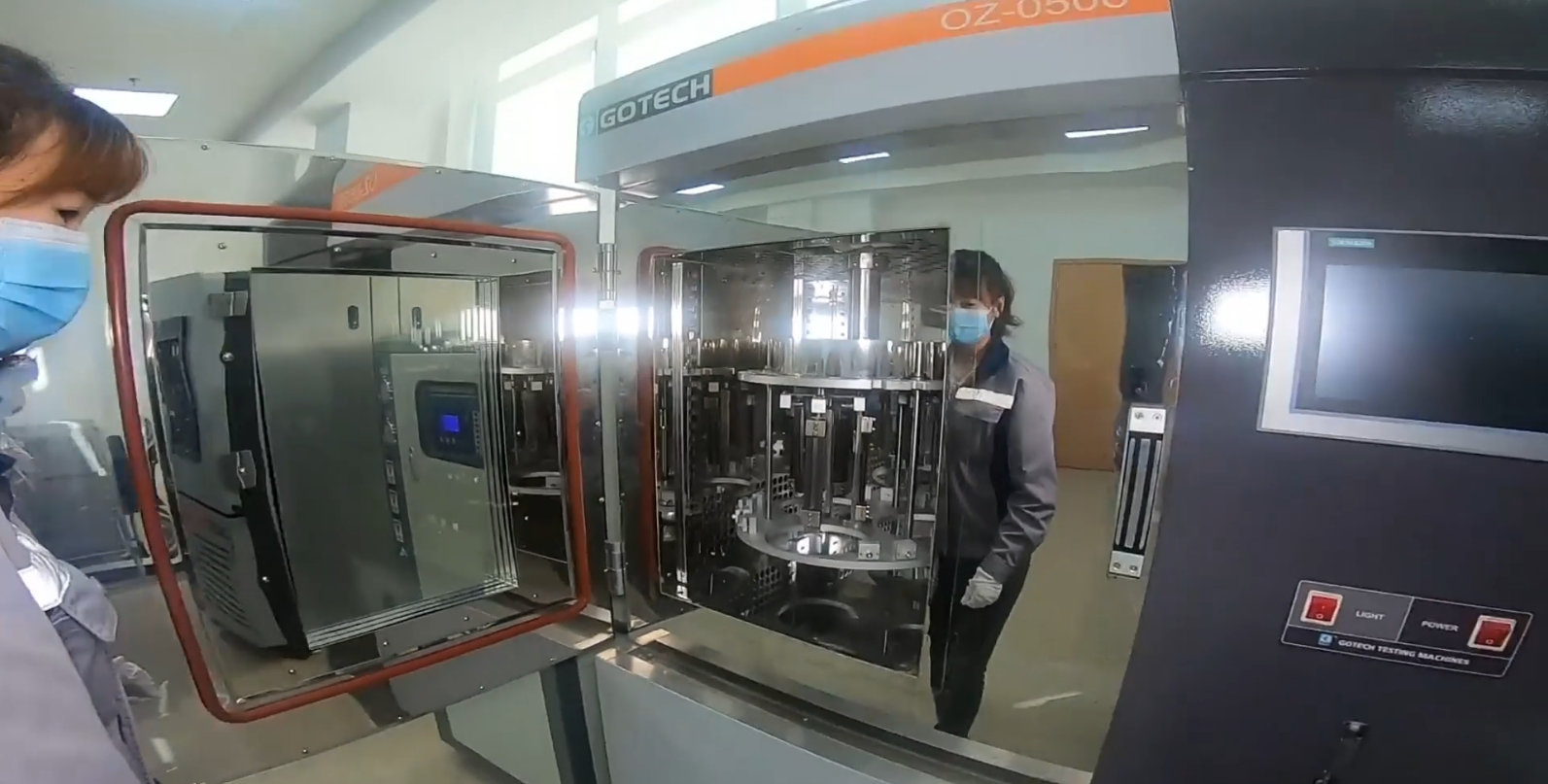
Finished assembly is not the release gate. Every batch is sampled and the sample must pass five tests in sequence. Only a passing sample releases the batch for sale; a failing sample holds the whole batch.
The pass bar is set by the sample, not by the sales forecast.
The five release tests.
Same sequence, every batch, before the carton is closed.
Temperature cycling
−40°C to +80°C · 72 hFinished blades checked for melting or cold-cracking after cycling.
Ozone resistance
50 pphm · 72 hSqueegees inspected at 5× for ozone-ageing cracks.
UV resistance
Intense UV · 72 hPlastic shell and clips checked for aging and degradation.
Wipe durability
1,000,000 cyclesNoise-free, streak-free wiping across the full cycle count.
Salt-spray
48 h · no rustSteel strips held in high-concentration salt fog.
Verify the process — then order a sample.
Send the vehicle models and quantities you are planning. The reply includes pair sizes, the five-test certificate for the current batch, export terms and a per-set price.